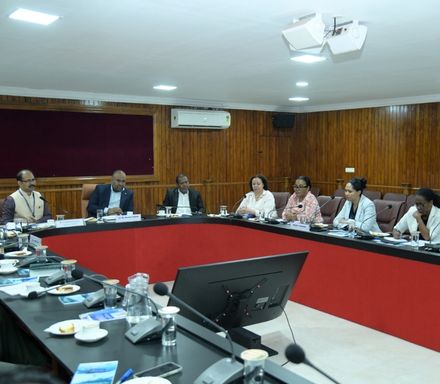
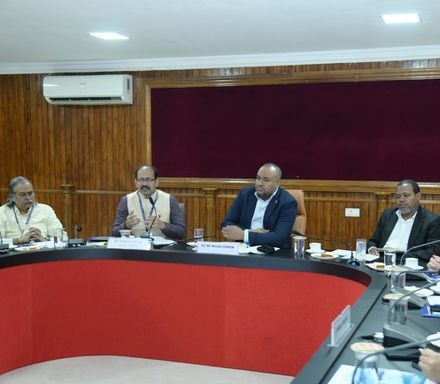
Seychelles delegation led by Principal Minister H.E. Wallace Cosgrow visits ICAR-CMFRI
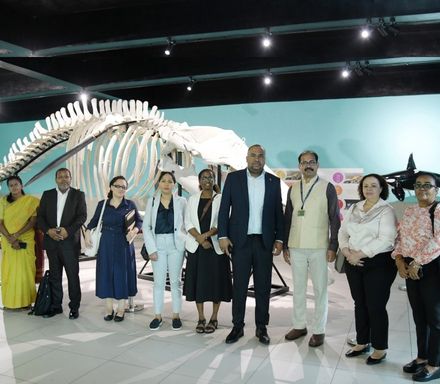
An eight-member delegation from Seychelles, led by H.E. Wallace Cosgrow, Minister for Fisheries, Agriculture & Blue Economy, visited the ICAR–Central Marine Fisheries Research Institute (CMFRI) on 27th August 2027 to explore avenues for bilateral cooperation in marine fisheries research, sustainable fisheries management and mariculture.
The delegation which also includes senior fisheries officials expressed interest in ICAR-CMFRI’s expertise and technologies in fisheries stock assessment, sustainable fisheries management, climate change impact assessment, seaweed-based value addition, ornamental fish breeding, mariculture, tuna fisheries and marine bioprospecting.
The visit was part of the Seychelles delegation’s wider engagement with India on agriculture and the blue economy.
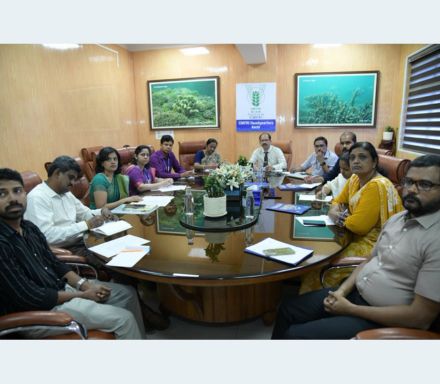
During the interaction, the delegation was keen to understand India’s experience in fisheries management and explored ICAR-CMFRI’s long-term fisheries datasets and scientific expertise as valuable areas for cooperation. Minister Wallace Cosgrow said that Seychelles signed Memorandum of Understanding (MoU) with the Government of India and Indian Council of Agricultural Research (ICAR) for bilateral collaboration in agriculture and fisheries.
ICAR-CMFRI Director Dr Grinson George made a detailed presentation on Inistitute’s research programmes and technological advances highlighting the institute’s work in fisheries resource assessment, biodiversity and ecosystem health, climate change, sustainable mariculture, marine biotechnology, fish health and nutrition, and socioeconomic studies of fishing communities.
The discussions identified several potential areas for knowledge exchange, capacity building and collaborative research between India and Seychelles in support of sustainable utilisation of marine resources and the development of the blue economy.
The Seychelles delegation sought details of fisheries data and digital technologies. ICAR-CMFRI demonstrated its National Marine Fisheries Data Management Centre, where field-level fisheries information is collected using mobile technologies and processed using modern analytical tools.
The visiting team also sought to understand India’s approach to balancing fisheries conservation with the livelihoods of small-scale fishers. ICAR-CMFRI explained its scientific and socioeconomic approach to seasonal fishing regulations and management measures, emphasising the need to ensure that conservation measures are both scientifically robust and socially acceptable.
ICAR-CMFRI’s scientists and Heads of various research divisions attended the interaction.