Report on SCSP Training Programme on “Cage Culture Practices in Kerala Waters”
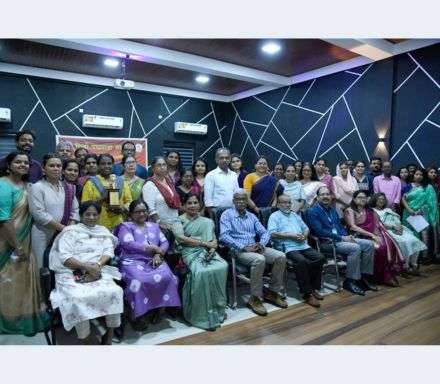
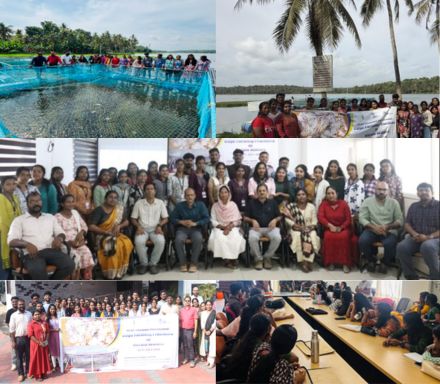
A five-day SCSP Training Programme on “Cage Culture Practices in Kerala Waters” was successfully organized at Vizhinjam Regional Centre of ICAR–Central Marine Fisheries Research Institute, from 13 to 17 July 2026 with the objective of enhancing the technical knowledge and practical skills of participants in sustainable cage farming of Marine fishes. The programme was inaugurated on 13 July 2026 by Ward Councillor of Vizhinjam Harbour, Ms. Afsa Sajeena in the presence of Dr. B. Santhosh, Head, ICAR–CMFRI, Vizhinjam Regional Centre, and other scientists of the centre. A total of 22 participants, comprising students and hatchery personnel from different parts of Kerala, attended the programme. The programme comprised a series of expert lectures, interactive discussions, practical demonstrations and hands-on training sessions covering the principles and prospects of marine cage farming, site selection, cage design and fabrication, candidate species for culture, seed selection and stocking, feeding and feed management, water quality monitoring, fish health management, cage maintenance, harvesting techniques, economics of cage farming, integrated multi-trophic aquaculture (IMTA), and cage-based seaweed cultivation. Participants actively interacted with the resource persons and gained valuable insights into scientific mariculture practices and entrepreneurship opportunities in the sector.
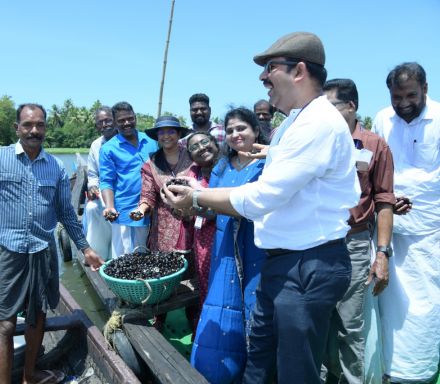
The practical component of the programme provided participants with first-hand exposure to cage fabrication, assembly of cage components, installation procedures, water quality assessment, fish handling, feeding practices and routine cage management. Demonstrations were also conducted on the fabrication and installation of cages, enabling participants to acquire essential operational skills required for successful cage farming. A field visit to cage farming units further enriched the learning experience by allowing participants to observe commercial cage farming operations, farm management practices and interact directly with farmers. The training concluded with an interactive feedback session, during which participants expressed their appreciation for the well-balanced blend of classroom learning and practical exposure. Overall, the programme successfully strengthened the participants understanding of scientific cage farming practices and is expected to facilitate the wider adoption of sustainable mariculture technologies for livelihood enhancement in Kerala.